
The trail starts at the Reserve’s southernmost parking area. Round trip: 0.8 mile. Habitats: pine forest, coastal scrub, rocky shores. Provides access via staircase to sandy Gibson Beach and views of Bird Island and China Cove. Other than Gibson Beach, the trail is fully accessible.
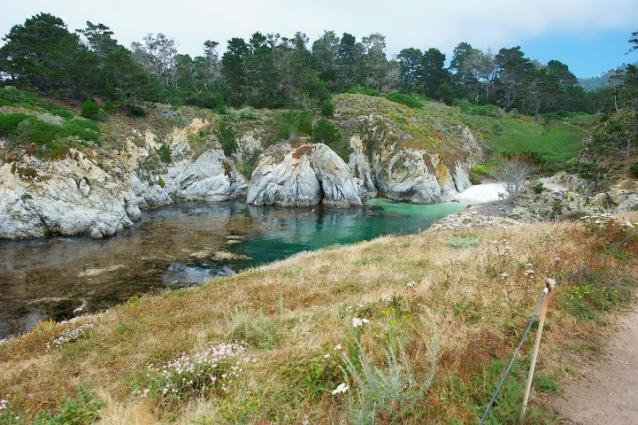
China Cove
On the way to the Bird Island overlook, you pass between Monterey pine woods and the sea. There are lovely views of two white sandy beaches: the small one in China Cove, and the longer Gibson Beach. Gibson Beach is accessible via a staircase. China Cove, with its sparkling jade-green waters, is one of the Reserve’s most stunning sights. In spring this spot becomes home to harbor seals, nursing their newborn pups; for their protection. Watch from the trail above – and don’t forget your binoculars (also available on loan from the information station at the Sea Lion Point parking area).
The sea pounds against these cliffs much of the year, enlarging the natural cracks and faults in the granite, and in time creates caves that slowly become arches. Look for the rock forms created by this coastal erosion as you head out to the Bird Island overlook. The arches eventually collapse, forming isolated outcrops such as Bird Island.
Walk between displays of brilliant wildflowers out to Pelican Point. Here you can get a close look at Bird Island, which becomes a large sea bird colony in spring and summer. Hundreds of Brandt’s cormorants nest close together. You will also see Western gull chicks, and, if you’re lucky, nesting Black-crowned night herons. In the waters below, a great blue heron might be standing on a piece of driftwood, watching patiently for prey. Scan for sea otters diving to feed or resting in the kelp, and for harbor seals hauled out on low-lying rocks.